



Dartmouth rising senior Annie Blasberg offers her perspective on what the newest student-athletes can expect when they arrive on campus in the fall.
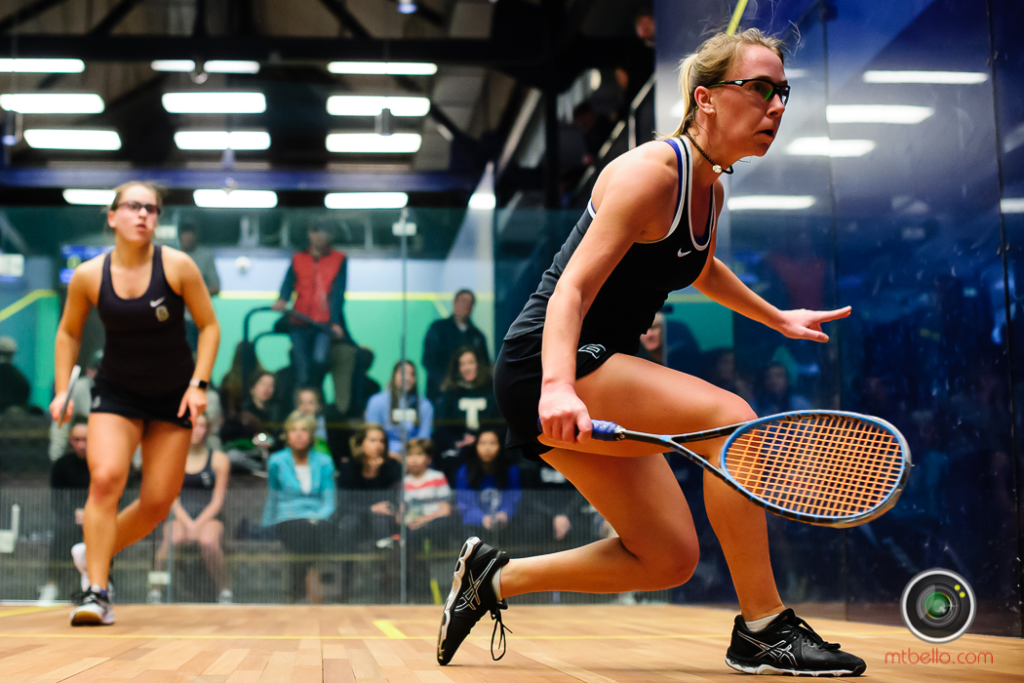
With the class of 2019 graduated and the summer now started, incoming freshmen are surely anticipating the start of their college careers. An unfamiliar campus, new people, challenging classes, and living away from home may feel overwhelming when first arriving at school. Being on court with your teammates will quickly establish a routine and a feeling of comfort as you adjust to your new environment.
College squash is a refreshing change after years of junior tournaments. You will be exposed to a higher level of competition and more experienced players both in matches and on your own team. Showing up for everything prepared and ready to work hard is important in gaining the respect of your teammates.
You will undoubtedly be practicing hard all summer in order to make a big impression in the fall, but don’t forget to give your body time to rest – it is a long season. Keep in mind: practices won’t just be on court. There’s off-court conditioning, and it might be your first time strength-training with a team. Looking after your body, stretching, eating well, and getting enough sleep are essentials – the best teammate is one who stays healthy. With more regimented practices, lifting, and conditioning, you will find yourself improving and getting stronger.
You will quickly realize the necessity of time management. Learning how to juggle classes, school work, practices, traveling, and matches, while also squeezing in some time to socialize and, hopefully, get sleep is an art that college athletes across campuses somehow learn to master. It’s an impressive balancing act and a skill that will be very useful throughout life. Many programs provide academic tutoring for student-athletes. Take advantage of this opportunity right away to get off to a great start.
One of the biggest differences from juniors is the team dynamic of college squash. Though you might have played on your high school squash team, for most junior squash players, the focus was on achieving good results in individual tournaments with an eye towards college recruiting. Fortunately, the stress and pressure of the recruitment process is behind you.
You are now surrounded by a group of people who share a love for the sport and a common goal. College matches take on a different tone. You no longer think about how winning or losing will affect your individual ranking; rather, there is only an emphasis on performing well to benefit your team. It is still just you and your opponent on court, but now you feel the support of your team in matches, during practice, and around campus.
You might be curious about where you will fit in on the ladder. Rest assured, no matter where you are, your team is excited to have you. Every position carries the same weight. Your teammates will become some of your closest friends, not only throughout your time at college, but in life as well.
Over your college squash career, you’ll spend a lot of time with your teammates at practice, on the bus, and in hotels. You’ll share exciting wins with your team, but also tough losses. Those are moments that often bring you closer together. Playing squash and being a member of a team in college is an unforgettable experience.
The beginning of college comes with a lot of changes, which may seem intimidating. These changes, however, can lead to many new and thrilling opportunities. As the fall approaches, being nervous will be natural. Knowing that you have four of the best years of your life ahead of you should help replace those nerves with excitement and enthusiasm.





 Theo Woodward, the Drexel University Assistant Coach of Men’s and Women’s Squash for the past two years, has been named the Head Coach of Men’s and Women’s Squash at Bowdoin College, according to the college’s press release from May 21.