


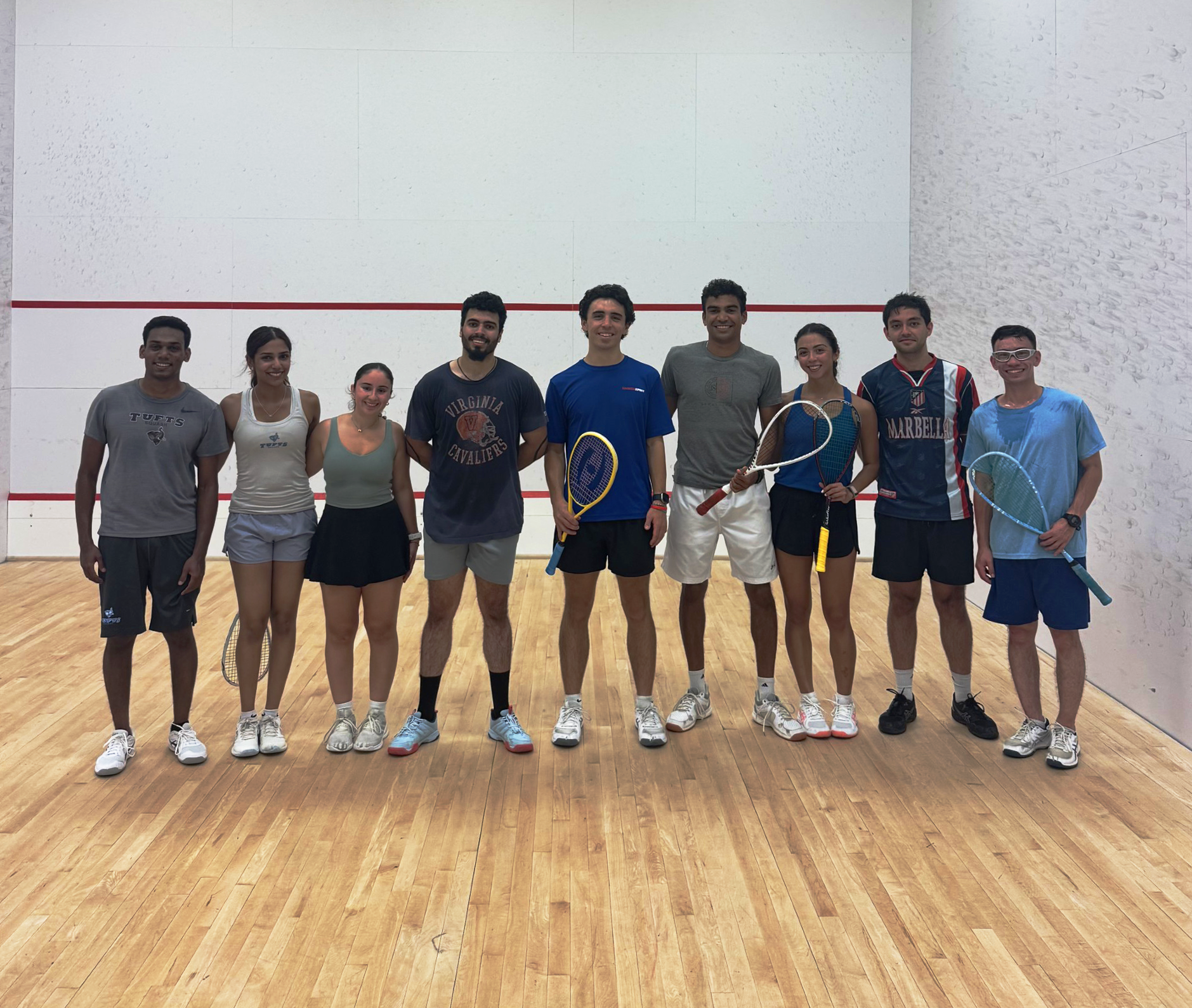
For many college athletes, graduation marks the beginning of a new chapter. The structure of practices, competitions, and time with teammates and friends change. For squash players in particular, finding ways to stay active and connected to the sport can look very different after college. For many, the desire to compete doesn’t disappear with graduation. Across the country, former college players are finding new ways to get on court, stay active and maintain the connections they built through the sport.
For Aidan Ray and Nieve Monderer, that shared experience helped inspire the creation of Graduate League Squash (GLS). Ray, a 2025 graduate of Dickinson College, and Monderer, a 2025 graduate of Tufts University, recognized a common trend among their friends, teammates and colleagues, too many former college squash players were putting their rackets away after graduation.
“There is an exact moment all of us CSA players share: that final team meeting on court at nationals when you realize ‘wow, this is it…’” Ray and Monderer said. “GLS is not intended to keep players in their past, but to help them realize that their squash careers don’t have to end at graduation.”
The idea behind GLS is to create opportunities for current and former college players to continue competing, stay active and reconnect with the sport and community that played such a central role in their college lives. For college squash players, that routine can be difficult to replicate after graduation. Players spend hours each day on the court and in the gym, building their schedules around squash. After graduation, those opportunities can become much harder to find.
“We truly feel that we are a part of this ‘lost generation’ of players,” Ray and Monderer said. “We wanted to give them a reason to train and compete in a meaningful way again.”
The response to GLS’s first event in Boston offered an early indication that there is an appetite for that opportunity. Held at Summer Street Squash Club, the inaugural tournament brought together 35 players representing more than 20 varsity and club programs. Participants ranged from current college players and recent graduates to players who had graduated nearly 20 years ago. For Ray and Monderer, one of the most meaningful parts of the event was seeing players from different generations of the college game reconnect, including current CSA players meeting graduates of their own schools. The event also demonstrated that the value of continuing to play extends beyond competition. Following the tournament, Ray said he has seen players continue to organize weekly. The events have also created opportunities for players to make professional connections and build relationships through their shared connection to squash.
“After the first GLS tournament ended, I’ve had 10 players getting together weekly for casual hit-arounds and training sessions,” Ray said. “We all share the same sentiment that our squash routine is something we’ve missed in our lives.”
GLS is now looking to build on that momentum. The organization is developing a schedule of tournaments in cities around the country, with the goal of helping players connect locally and nationwide. It is also working on a ranking system for individual players and their alma maters, where tournament participation and results could contribute to season-long GLS rankings.
The next GLS event will take place October 10–11 at Open Squash FiDi in New York City.
For recent graduates looking for ways to stay involved, Ray and Monderer believe the answer can start locally: find other former teammates and college players, organize a group and get back on court.
“There are CSA players all over the US,” they said. “Reconnect with those who all share the same passion for squash and look out for a GLS tournament around your city.”
College squash may end at graduation, but the desire to compete, stay active and remain connected to the sport doesn’t have to.
To love the game is to grow the game.